
By Debbie Gardner
dgardner@thereminder.com
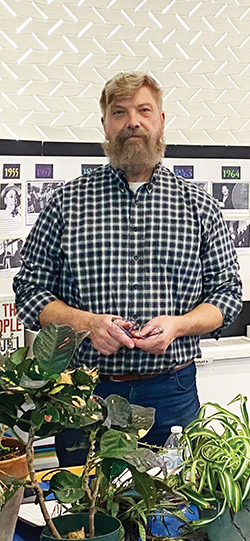
If you are a fan of TV 22’s Mass Appeal, you probably know this month’s gardening expert, Ed Sourdiffe as The Green Thumb Guru. But Sourdiffe’s experience with growing things goes far beyond what you see on TV.
Sourdiffe has been nurturing growing things his whole life, turning a childhood hobby into advanced degrees in biology, followed by a stint as a national park ranger, and then a longtime role as head of historic gardens at Hancock Shaker Village in Hancock, MA. His extensive gardening knowledge has made Sourdiffe a popular speaker at museums and at the annual Spring Gardening Workshops hosted by the Western Mass Master Gardeners Association.
With food costs on the rise, Prime tapped Sourdiffe for some expert tips on growing veggies in containers so you can turn any sunny spot into a bountiful harvest regardless of space or mobility issues.
Here’s the knowledge he shared:
Q: Everyone knows you can grow a tomato in a container on your patio or porch, but what other types of vegetables can be grown in containers?
“Just about every type of vegetable can be grown in a container if that plant’s specific needs are met. Instead of asking what types can be grown in containers, it’s better to ask which types are more difficult to grow this way.
For example, corn would be a tough one. It has a massive root system, and it requires being surrounded by other corn plants to be properly pollinated. The squash family can be tricky if the ones planted are not the bush type and are the vining type. The vining type will take over perhaps too much space as they trail out.
“If you decide to try your hand at container gardening with vegetables, just remember to use the same rules as you do in a traditional ground-based vegetable patch. You need full sun and plenty of water. You will need to water your potted up vegetable plants more than you would in a regular garden, as the plants have less of a reservoir of moisture to draw from. You will also have to fertilize more, perhaps every two weeks as you would any containerized plant. The act of watering itself washes out nutrients from the soil in pots.
“A very important thing to remember is to never use soil from the garden in a potted situation. Soil from your landscape is too heavy and not appropriate. Potting soil is specifically designed to stay light and airy, giving the plants’ roots air spaces and a density that the roots can easily move through. Garden soil will pack down with each watering and become too dense in time for the plants to flourish.”
Q: Are there actual benefits to using containers for your vegetable garden versus the traditional method?
“There are many benefits to vegetables being grown in containers. When vegetables are grown in this way they can be placed closer to the kitchen where they will be used. In essence they become a “kitchen garden”. When your vegetables and herbs are right outside your door you are more likely to use them. If they are close by, they are easier to tend to and keep an eye on. This way you can spot any pests before they become a problem and easily keep an eye on watering needs.
“If someone has mobility problems container gardening is a great solution. Having the plants at hand, a gardener doesn’t have to go traipsing through the yard to some distant point, lugging all their equipment with them. By using tall containers, benches or window boxes you can garden at waist height no bending or kneeling required.
“Containers also act like a security system. Having trouble with pests and predators eating your strawberries? Try growing them in hanging pots. By keeping them in the air, you are keeping them out of reach of slugs and chipmunks. Added bonuses are that the fruit stay clean and they add beauty to the area with their flowers, fruit and trailing habits.
“Being portable, container gardening lets you adjust the ‘weather’ for the plants. When a heatwave arrives you can move plants that may bolt (premature flowering), to cooler areas. Plants like lettuce, basil, cilantro, carrots, onions, etc., will all bolt when temperatures are consistently above 85 degrees. This portability also comes in handy to prevent frost and help lengthen your vegetable gardening season.”
Q: Plant pairing for better harvest is a buzzword in gardening this year. Are there plant pairs that work well in containers?
“Plant pairing, called companion planting, is a terrific thing for plants. However, it is not a new thing; it is a part of ancient wisdom that people have used for ages. A famous example of this (although three plants interact here), is the ‘Three Sisters.’ Native American gardeners would plant corn, beans and some form of squash together. Each plant ‘helped’ the other plants. The corn acted like a trellis for the beans, the beans added nitrogen to the soil, and the squash vines and leaves acted as living mulch shading the soil, keeping weeds down, and keeping the soil cool to help preserve moisture in it. The vines also prevented raccoons from raiding the corn (they hate walking on the prickly vines).
“In a container, here are some pairings that will save space and help fight off pests, etc.:
Tomatoes and Basil: Basil repels pests and is believed to enhance tomato flavor.
Peppers and Onions: The strong scent of the onions helps keep aphids away from the peppers.
Cucumbers and Dill: Dill attracts beneficial insects that protect the cucumber from pests.
Lettuce and Radishes: Radishes grow fast and deep, while lettuce stays shallow. By the time the lettuce needs more room the radishes have already been harvested.