Innovative Assistance
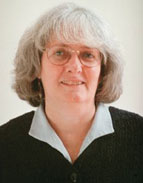
Karyl Lynch
By Karyl Lynch
You consider yourself innovative. You have a great idea; it's the proverbial better mousetrap. You are not alone. Innovation is a key word in today's business climate. In 2005, the last year for which complete data is available, the U.S. Patent and Trademark Office received 417,508 applications for patents and granted 157,717 new patents.
But how does a novice navigate the maze of getting their great idea from the kitchen table to the marketplace? There are companies that offer such services but how does the inventor-to-be know which one, if any, is the right one? In the Pioneer Valley there is help.
The Innovators Resource Network
For a group of 60 inventors and entrepreneurs in western Massachusetts and northern Connecticut, innovation is explored in monthly meetings of the Innovators Resource Network (IRN). IRN meets at the Andrew M. Scibelli Enterprise Center on the campus of Springfield Technical Community College.
At six public and six member-only meetings each year, the not-for-profit organization provides opportunities to learn the ropes needed to get new products on the market, whether by starting a business or licensing a patented product.
Innovation versus invention
"Most products are innovations improvements on what has come before rather than pure invention", explained Dave Cormier, IRN co-founder.
This thought was very much on the minds of a small group of successful inventors eight years ago as they came up with the name for the organization by recognizing the benefits of networking and access to information on resources.
"Meetings provide 'cheerleading' for those trying to move their ideas forward along with a 'strong dose of reality' for those who need to understand that the idea is a very small part of the work that is involved in getting a product to market," he said.
Public meetings are of two types. Presentations have focused on specific topics such as patent law, using plastics, dealing with Big Box retailers, and how to make your own prototype. At other meetings, entrepreneurs tell stories about the process they went through to reach the marketplace.
In recent months the group has heard from Richard Fuchs, a Connecticut inventor who has licensed several hardware inventions, and Leslie Grinnell of Eddie's Wheels, a Shelburne Falls company that sells carts for disabled dogs world-wide.
Success stories
Recent speakers Sonia and Chris Hellios of Southampton brought their Seadine product to market before they discovered the Innovators Resource Network. They shared information about their learning curve as they discovered that what they had thought was an easily manufacturable product was actually quite complex and that identifying dependable manufacturers was a significant problem. Seadine, an underwater fish food, is sold in Aruba and on their web site.
Sonia and Chris later used the members' only meeting to get feedback on their second product, a medical product.
"IRN is great because it provides access to a forum to bounce ideas off of. And it's really great to know that you are not alone and to hear about the positive experiences others have had," Sonia said.
The Confidisc, an injection delivery system for diabetics, has now reached a stage in its development that it can be talked about publicly.
"The beauty of the 'closed format', members-only meeting is that it affords members the unique opportunity to solicit opinions from their peers about the design, manufacturability and marketability of their as-yet-to-be-protected property with assured and respected confidentiality,", said Rick Ricard of Northampton, who is co-coordinator of the meetings. Rick has used the meetings to get feedback on two product ideas he has had since he first brought his successful product, the Bagel Guillotine, to market 10 years ago.
Perfecting the pitch
Members sometimes use the closed meeting format as an opportunity to get comfortable making their pitch to potential licensees or investors. And occasionally a member's presentation has been quite short because it turns out that someone in the room has purchased that product idea.
The success of groups like IRN can be measured sometimes by whether members' product ideas make it to market. Equally as important is saving valuable time and money when feedback suggests that the product shouldn't move forward.
"Most often this is because the product is already on the market", said Cormier. "Research is absolutely the first step to take and then you have to keep on doing it at every step."
Karyl Lynch is co-founder of the Innovators Resource Network and a partner in Pelham West Associates (www.pelhamwest.com)